Turning Falsehood into Form
What happens when an artist trains a machine to speak in the syntax of a lie.

In this essay, I reflect on the origins of my new project, Con Jobs — a generative archive that transforms the language of deception into art. What began as an experiment in confronting Trump’s torrent of falsehoods has evolved into a meditation on how language, once weaponized, can still be reimagined for truth.
Over the past few months, I’ve been building a project called Con Jobs. It started as a reaction to something I couldn’t stop thinking about—the sheer volume of falsehoods that has poured out of Donald Trump’s mouth both as a candidate and during his presidencies. Over 30,000 documented lies, distortions, and fabrications. Numbers so large they stop feeling real. But they are real, and they changed how we hear, think, and even feel language itself.
I began to wonder what happens when the truth is no longer just contested, but drowned. What does it do to us when words—once meant to connect us—are turned into noise, bludgeon, spectacle? I realized that the only way I could engage with that flood was not through politics or journalism, but through art.
I designed a generative system that ingests Trump’s falsehoods and speaks them back through algorithmic recombination — not to correct them, but to expose their rhythm and design. The machine became a kind of echo chamber, replaying the absurd until it began to sound like prophecy.
What emerged were new sentences that carried the rhythm and syntax of Trump’s voice but veered into the surreal and uncanny. They were hilarious, disturbing, strangely poetic. Each one felt like an artifact from a parallel world, the logical conclusion of a language already unmoored from truth.
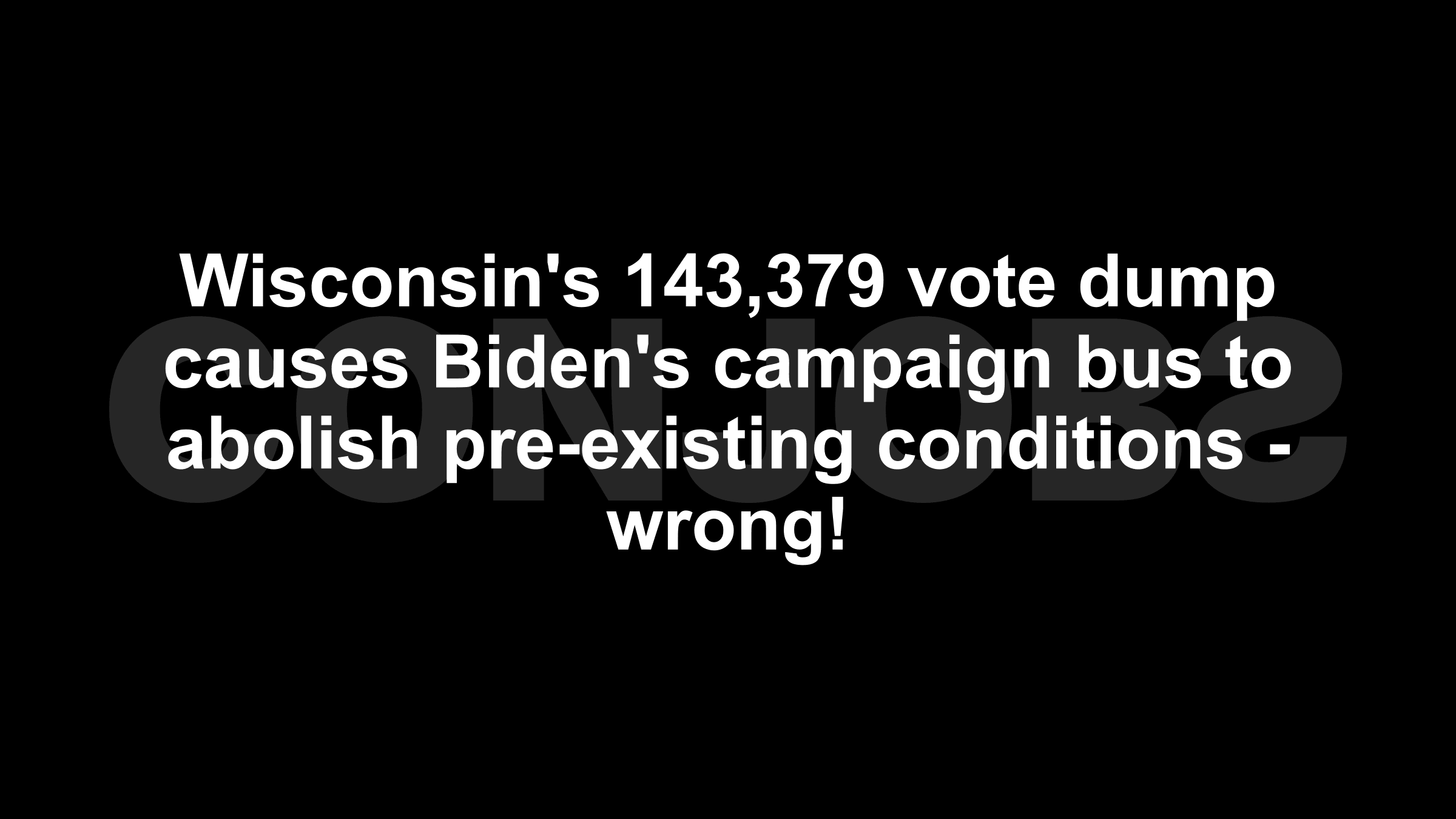
That’s how Con Jobs was born. It’s an evolving series of generated statements that read like fragments of absurdist poetry—mutations of propaganda, jokes turned to ghosts. Some make you laugh, others sit in your gut like static. Each one is built from the DNA of deception itself, yet transformed into something that reveals the machinery behind it.
I’m not interested in parody or satire. I’m interested in the system—in how misinformation operates as an aesthetic form. How repetition builds belief. How nonsense, repeated enough times, begins to sound like prophecy. Con Jobs isn’t about one man’s lies; it’s about the ecology that allowed them to thrive, the cultural soil that keeps nourishing them.
When I scroll through the archive of these generated lines, I sometimes feel as if I’m staring into a linguistic fossil record of our political moment. Lies decay faster than truth, but they leave behind traces—shapes, tones, memes, a residue of distortion. My goal is to preserve that residue, to hold up a mirror to the absurdity and to the damage it has done.
The result is both comic and tragic. Each con job is ridiculous on its surface, but underneath it carries something heavier: the recognition that we’ve grown accustomed to the absurd. That we’ve normalized a world where words can mean anything—or nothing.
Art, for me, is still a way of resisting that collapse. It can slow time down. It can make us look again. And sometimes, through absurdity, it can tell the truth more clearly than reason ever could.
That’s what Con Jobs is about: transforming deception into reflection. Taking the language that broke the world and turning it, however briefly, toward understanding.
If you’d like to see the project: conjobs.live